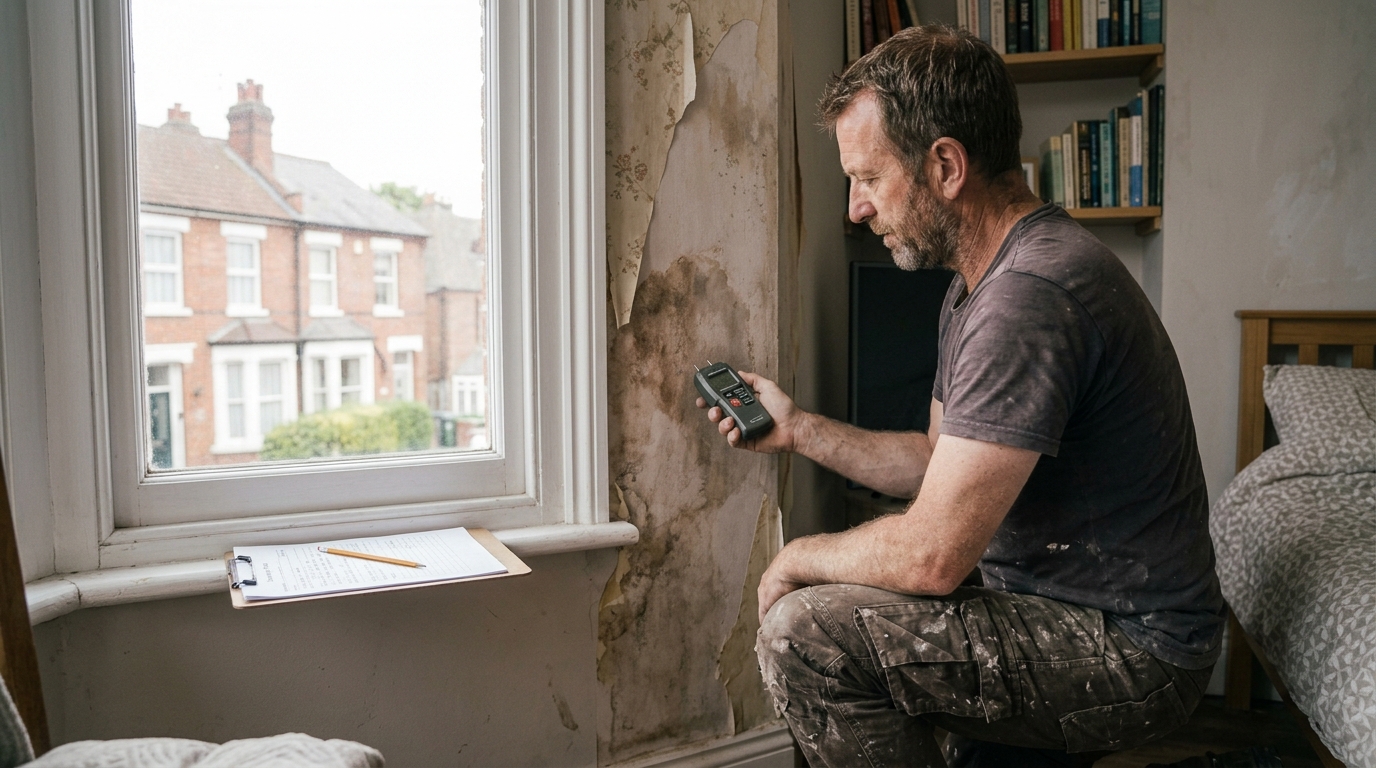
Damp in a building is moisture present in walls, floors, or ceilings at a level that causes visible staining, material decay, or mould growth, and it has three distinct causes that are routinely confused with one another: rising damp, penetrating damp, and condensation. Each has a different mechanism, a different set of visible signs, and a different remedy. Treating one as if it were another is the single most common reason a damp "fix" fails to solve the actual problem.
Why Damp Is Common in Salisbury's Older Properties
Salisbury's SP1 and SP2 postcode districts hold a large stock of pre-1920s solid-wall construction, built without the cavity gap that has separated inner and outer wall leaves in UK housing since the interwar period. A solid wall has no cavity to break moisture's path from outside to inside, and where these properties were finished in lime plaster and lime mortar, materials designed to let moisture pass through and evaporate unlike modern cement-based render, a later repair using the wrong modern material can trap moisture instead of letting it breathe. Many of these properties also predate the standardised use of a physical damp-proof course.
Rising Damp: Cause, Signs & How to Recognise It
Rising damp is moisture drawn upward through a solid wall by capillary action, occurring where a wall's damp-proof course (DPC) is missing, bridged, or has failed. The telltale sign is a tide-mark stain that stops at a roughly consistent height, typically between 300mm and 1000mm above floor level, because capillary action loses force with height. White, powdery salt deposits (efflorescence) often appear at the same height, and skirting boards in the affected area typically show degradation before the wall above them does. A missing or genuinely failed DPC is different from a bridged one: in many of Salisbury's older stone buildings, the original slate or bitumen DPC is still intact but has been bridged by a raised external path, render taken down below the DPC line, or a raised internal floor screed, in which case removing the bridge solves the problem, and chemical DPC injection (which some damp-proofing companies offer as a default first response) is unnecessary and won't work. An independent RICS- or PCA-qualified surveyor, rather than a contractor who also sells the remediation, is the right person to confirm which situation applies before any injection work is commissioned.
Penetrating Damp: Cause, Signs & How to Recognise It
Penetrating damp is moisture entering a wall horizontally through a specific defect rather than rising from the ground: cracked render, failed pointing between bricks, a leaking or blocked gutter overflowing against the wall, or a bridged cavity. The sign that distinguishes it from rising damp is location: penetrating damp staining correlates directly with the position of the external defect, can appear at any height on the wall, and typically worsens after heavy rain and improves in a dry spell.
Condensation: Cause, Signs & How to Recognise It
Condensation forms when warm, moisture-laden indoor air meets a cold surface and releases that moisture as liquid water on contact. It accumulates most visibly at a room's coldest points, such as window reveals, external corners, and behind furniture against an outside wall, as black mould spotting, most often the Cladosporium species, rather than a wet stain, along with droplets on glass and a musty smell with no obvious water-entry point. Solid walls make this worse than in a cavity-wall property, because they run colder at the surface, and everyday activity (cooking, bathing, drying clothes indoors) adds the moisture load that the cold surface then condenses out. Improving ventilation, whether trickle vents, extractor fans, or a Positive Input Ventilation (PIV) unit for a whole-property fix, makes an immediate difference to condensation but none to rising or penetrating damp, which is the clearest practical way to tell them apart. Turning the heating up without improving ventilation makes condensation worse, not better, since warmer air holds more moisture until it hits that cold surface.
Which Type of Damp Do You Have | Does It Need a Handyman or a Damp Specialist?
Condensation and penetrating damp both sit within FixWell's handyman and property maintenance scope, since the remedy is either improving ventilation or fixing the specific external defect letting water in. Rising damp is different: remediating it properly means installing or renewing a damp-proof course, specialist damp-proofing contractor work, ideally preceded by an independent damp survey rather than a quote from whoever happens to be selling the remedy. FixWell will say clearly which category a property's damp falls into rather than attempting a fix outside that scope.
What FixWell Can Address Directly
Where the cause is penetrating damp from a blocked or overflowing gutter, FixWell's gutter cleaning service in Salisbury removes the blockage that's forcing water against the wall in the first place, often resolving the damp without any further work needed. Condensation is addressed through FixWell's home repairs service, which covers extractor fan fitting and ventilation improvements, and forms part of the wider property maintenance service that catches these issues on a routine inspection before they become visible mould.
Damp, Home Insurance, and Resale
Correctly diagnosing which type of damp is present matters beyond the immediate fix: a buyer's surveyor will flag any damp sign during a property sale, and treating condensation as if it were rising damp (or the reverse) wastes money on the wrong remedy without resolving what a subsequent survey will still detect. FixWell's guide to common home repair problems in older UK properties covers damp alongside the other maintenance issues typical of Salisbury's period housing stock.